

Most of Russia has four seasons, but how long and how harsh each one is depends on where you stand. Winter (roughly December to February) is the defining season: Moscow averages −6.2 °C in January, Yakutsk −36.9 °C, and Oymyakon in Sakha has recorded −67.7 °C, while subtropical Sochi on the Black Sea stays at about 6 °C. Summer (June to August) is short but warm almost everywhere, with July averaging close to 20 °C in Moscow and even in Yakutsk. Spring and autumn are brief transitions, marked by the rasputitsa mud seasons in the countryside and, in Saint Petersburg, by the white nights from mid-May to the end of July.
Two things explain the spread: sheer size and distance from the sea. Russia is the largest country in the world and spans eleven time zones, and most of it lies far from any ocean that could soften the seasons. The Atlantic’s influence fades eastward across the European plain, mountains in the south block warm air from the Indian Ocean, and the north lies open to Arctic air. About 65 % of Russian territory sits on permafrost. The sections below follow the calendar across the map, from the Baltic coast in the west to the Sea of Japan in the east.
Kaliningrad: The Mildest Winter on Russia’s Baltic Coast
Kaliningrad Oblast, the semi-exclave between Poland and Lithuania, is the westernmost part of Russia and the most Atlantic in character. Its climate sits on the line between oceanic and humid continental, depending on which winter threshold is used: the coldest monthly means stay above −3 °C but fall just below freezing. January averages −1.2 °C and February −0.6 °C, with daytime highs just above freezing, so winter here is grey, damp and changeable rather than deep-frozen. Nearby Baltiysk is Russia’s only Baltic port that stays ice-free through the winter.
Summers are mild rather than hot, with a July mean of 18.5 °C and highs around 23.5 °C. Rain is spread through the year, totalling 816 mm, with July and August the wettest months at 91 mm each. Cold snaps do happen when continental air pushes west, and the city has fallen to −33.3 °C in February, but such spells are short.
Sochi and the Black Sea: Russia’s Subtropical Corner
Sochi, at about 43° N on the Black Sea coast below the Caucasus, has a humid subtropical climate, the warmest seasons in Russia. Its January mean is 6.3 °C, with daytime highs near 10 °C, and palms such as the Canary Island date palm grow along the seafront. Summer is the beach season: August averages 24.3 °C, with highs of 28.6 °C, and the sea warms to about 23–27 °C. The record is 39.4 °C, set on 30 July 2000.
Sochi’s winters are also its wettest time. The city gets about 1,650 mm of precipitation a year, more than twice Moscow’s total, and December, January and October each bring around 177 mm. Cold northerly winds still push the temperature below freezing at some point every winter, and the record low is −13.4 °C, set on 25 January 1892.
Moscow’s Four Textbook Seasons and the Rasputitsa
Moscow has the clearest four-season year of any large Russian city. On the 1991–2020 normals at the VDNKh station, January averages −6.2 °C, with highs of −3.9 °C and lows of −8.7 °C, and the record low is −42.1 °C. As across most of Russia, snow usually covers the ground through the winter, and the city is short of light: December brings just 18 hours of sunshine in the whole month. The thaw arrives in March and April, when the mean rises from −0.7 °C to 6.9 °C.
That thaw is the first of the two rasputitsa seasons. The word, built from the Russian put’ (“road, way”), names the weeks when melting snow in spring, or heavy rain in autumn, turns unpaved roads into deep mud. The chernozem and clay soils of the region soak up water like a sponge, roads in some districts are closed or weight-limited, and in the early twentieth century about 40 % of rural Soviet villages had no paved road at all. The autumn rasputitsa sets in when the daily mean drops to about +5 °C, which cuts evaporation while the rains keep soaking the topsoil; in Moscow the October mean is 5.8 °C. Both seasons have shaped military history, slowing Napoleon’s army in 1812 and the German invasion in 1941.

Summer in Moscow is warm and fairly wet. July averages 19.7 °C, with highs of 24.7 °C, and it is also the rainiest month, at 84 mm out of 713 mm a year. Heat waves can push far beyond that: the record is 38.2 °C. June and July bring around 270–280 hours of sunshine each, about fifteen times December’s total. Autumn is short. September still averages 11.9 °C, but by November the mean is below zero again, at −0.5 °C.
Saint Petersburg’s White Nights, Mid-May to the End of July
Saint Petersburg, at about 60° N on the Gulf of Finland, has slightly milder winters than Moscow but far more extreme daylight. The length of the day ranges from 5 hours 53 minutes at the winter solstice to 18 hours 50 minutes at the summer solstice. From mid-May to the end of July the sky never gets darker than nautical twilight, the period known as the white nights, which has given the city one of its nicknames. The White Nights Festival fills those weeks, and its Scarlet Sails celebration, with fireworks and a show marking the end of the school year, is one of its highlights.

The flip side is a dim winter. December averages just 8.1 hours of sunshine for the whole month, and the city has 165 overcast days a year. Winter means sit around −5 °C in January and February, the Neva usually freezes in November or December and breaks up in April, and snow covers the ground for about 118 days. July is the warmest month, with average highs of 23.3 °C, and the record of 37.1 °C came in the 2010 heat wave.
Yakutsk and Oymyakon: The 100-Degree Year in Sakha
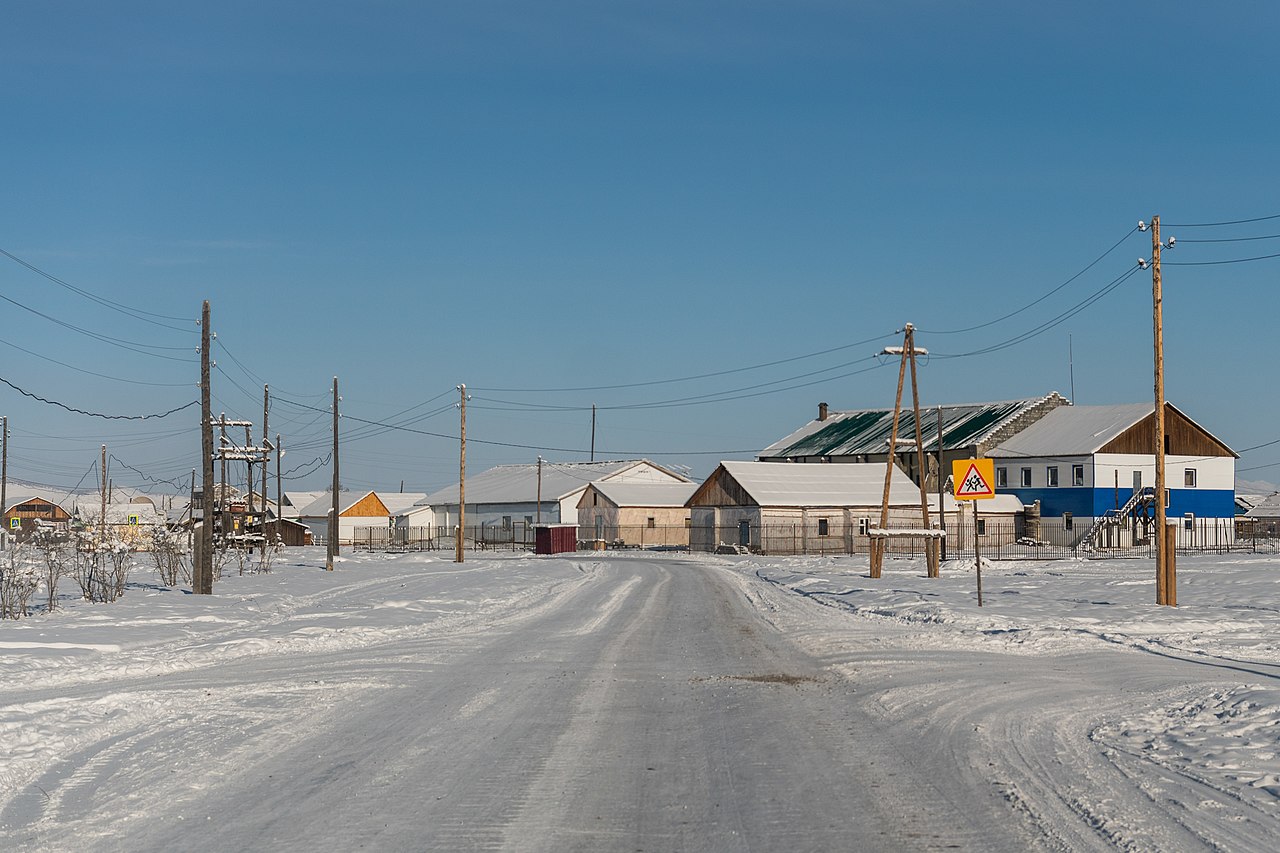
East of the Urals the seasons stretch to extremes. Yakutsk, the capital of the Sakha Republic, has the coldest winters of any city its size or larger on Earth. Its January mean is −36.9 °C, and it has never recorded a temperature above freezing between 10 November and 14 March. Under the Siberian High the winter air is still and dry, and the whole year brings only 235 mm of precipitation. The record low is −64.4 °C, on 5 February 1891. Yakutsk is also the largest city built on continuous permafrost, and many buildings stand on concrete piles.
Yet Yakutsk’s July is warmer than Vladivostok’s. July averages 19.9 °C, with daytime highs of 25.8 °C, and the record of 38.4 °C was set on 17 July 2011. Daytime highs above 30 °C in summer give the region a seasonal swing of about 102 °C, among the largest in the world. Spring and autumn barely exist: the mean jumps from −3.7 °C in April to 8.0 °C in May, and falls from 6.4 °C in September to −25.9 °C by November.
Further northeast, the twin “poles of cold” go further still. Verkhoyansk recorded −67.8 °C in 1892 and Oymyakon −67.7 °C on 6 February 1933, the lowest official readings in the Northern Hemisphere; only Antarctica and Greenland have recorded lower official temperatures. Oymyakon’s January mean is −45.7 °C, and its schools close when it is colder than −55 °C. On 20 June 2020 Verkhoyansk reached 38.0 °C, the highest temperature ever measured north of the Arctic Circle.
Vladivostok: Dry Winters and Monsoon Summers on the Sea of Japan
On the Pacific coast the seasons turn again, this time under the East Asian monsoon. Vladivostok sits at the same latitude as Sochi, about 43° N, but on the 1991–2020 normals averages 9.5 °C colder over the year and about 18 °C colder in January, under the influence of the Siberian High. January averages −11.9 °C, colder than Moscow, yet December to March bring only about 18 mm of precipitation a month and plenty of clear, sunny days.
Summer reverses the wind. Moist air off the Sea of Japan makes June to August cloudy and wet, with humidity averaging about 90 % and rainfall peaking at 176 mm in August, the city’s warmest month at 20.0 °C. That is a summer-rain pattern almost the opposite of Sochi’s winter rains. Late summer can also bring the remains of typhoons; Typhoon Sanba reached the city as a tropical storm in 2012. Autumn, by contrast, is drier and sunnier, with September and October averaging 16.3 °C and 9.2 °C and around 195–200 hours of sunshine each.
Lining Up the Seasons for a Trip Across Russia
For a single journey across the country, May to September is the only stretch when monthly averages are above freezing in every region, from Kaliningrad to Oymyakon, and June to August is the warmest part of it, which makes it the natural season for a long ride on the Trans-Siberian Railway. Saint Petersburg is at its most striking in the white nights of June; Sochi’s sea is warmest in July and August; Vladivostok’s drier, sunny September often beats its damp summer. For snow and frozen rivers, January and February are the months, from Moscow’s parks to −40 °C mornings in Yakutsk. The regional climate types behind these contrasts are set out in our climate of Russia guide, and a look at how big Russia is makes it clear why a single country can hold both palm trees and the coldest towns in the Northern Hemisphere.